Column: Remember Black Virginians who spread freedom’s message
By Andrew Lawler
August 6, 2026
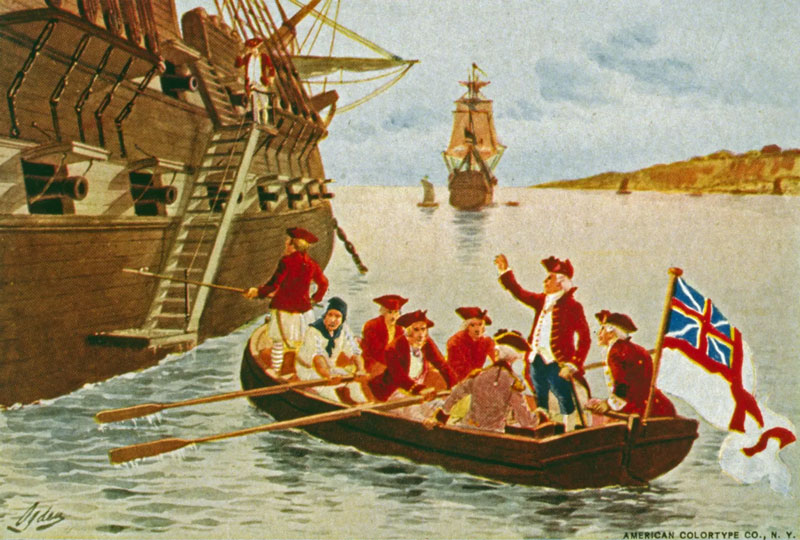
If you peered through the summer haze at Cape Henry on Aug. 7, 1776, a flotilla of Royal Navy ships and merchant vessels was sailing out of Chesapeake Bay, marking the end of 169 years of British rule in Virginia.
Patriots celebrated the departure of the fleet with the colony’s last royal governor, Lord Dunmore. He had, the Virginia Gazette reported, “perpetrated crimes that would even have disgraced the noted pirate Blackbeard.” The severed head of that infamous buccaneer had been stuck on a pole in Hampton.
For more than a year, from July 1775 to August 1776, the pugnacious Scottish earl posed a mortal threat to the rebellion against the crown. While most royal governors fled, Dunmore stayed to fight. After abandoning Williamsburg, he made Portsmouth’s Gosport Navy Yard his base of operations.
But patriots were not the only ones yearning for liberty. At great risk to their lives, hundreds and perhaps thousands of enslaved people slipped away from their plantations, better termed forced labor camps. At first, the royal governor gave them sanctuary. In November 1775, he gave them freedom in exchange for military service. Soon, Tidewater became the center of mainland North America’s biggest slave insurrection prior to the Civil War.
The royal governor’s former friend, George Washington, feared the worst. If Dunmore is not “instantly crushed,” the head of the Continental Army warned, “he will become the most formidable enemy America has.” The math was simple. Four out of 10 Virginians were enslaved. The patriots could not fight the British and their own human chattel.
Smallpox eventually wreaked havoc on Dunmore’s homegrown army, which relocated from Portsmouth to Gwynn’s Island in May 1776 to inoculate the Black soldiers from the deadly disease. After patriot artillery forced them to abandon that site in July, the royal governor and his captains sailed south, toward the open ocean, with the surviving Black loyalists and their families.
On Aug. 6, three British boats landed near Lynnhaven Bay to gather supplies for the sea voyage. A squadron of 60 rebels rushed to the beach. The two sides exchanged shots before the landing force withdrew. “We took one prisoner who came ashore with two Negroes,” one patriot soldier noted, “but the Negroes made their escape.”
Their fate is unknown, but the rest went on to defeat Washington’s troops at the Battle of Long Island. They served the British cause as free people until the war’s end in 1783. Faced with re-enslavement by their former patriot owners, thousands of them left the land of liberty.
These forgotten refugees took their love of freedom and self-governance with them to Canada, Britain, Germany and even Australia. They later founded the first colony of emancipated slaves in Africa. At their new home of Freetown in Sierra Leone, they built a town that would not have looked out of place on the Chesapeake. They inspired the abolitionist movement and played a key role in ending slavery in the world’s largest empire.
America was, as the slogan goes, made in Virginia, but it also inspired the world. Looking back now, it seems obvious that these Black men, women and children shared the ideals expressed in the Declaration of Independence. They fought, and many died, seeking freedom. What is more American than that?
The 250th anniversary of the nation’s founding is an opportune moment to reaffirm what makes the United States unique. Unlike other nations, we are based not on a religion, language or an ethnicity, but on a concept — liberty. If we are true to our mission, we should honor all of those who fought for freedom, no matter the color of their coat or the hue of their skin.